

One Health AMR, A Solution to Fight AMR.
We have a slogan of “Collaborate, Combat, Conquer AMR”
Medical & Health Care Solutions for AMR
We’ve Years of experience in Antimicrobial Resistance (AMR).
Who can be a part of this programs?
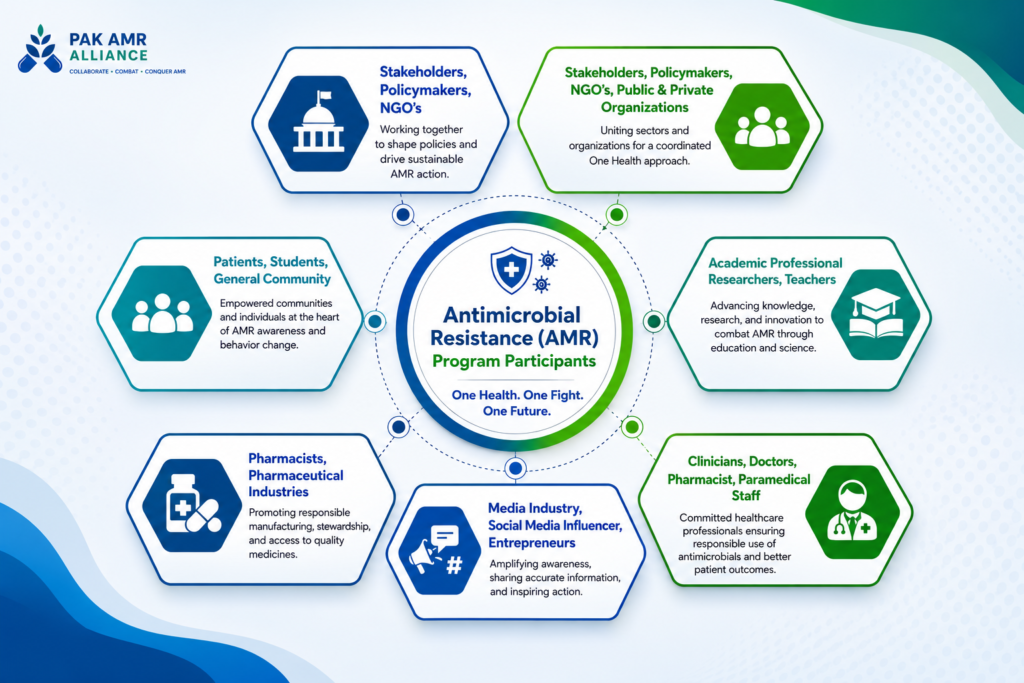
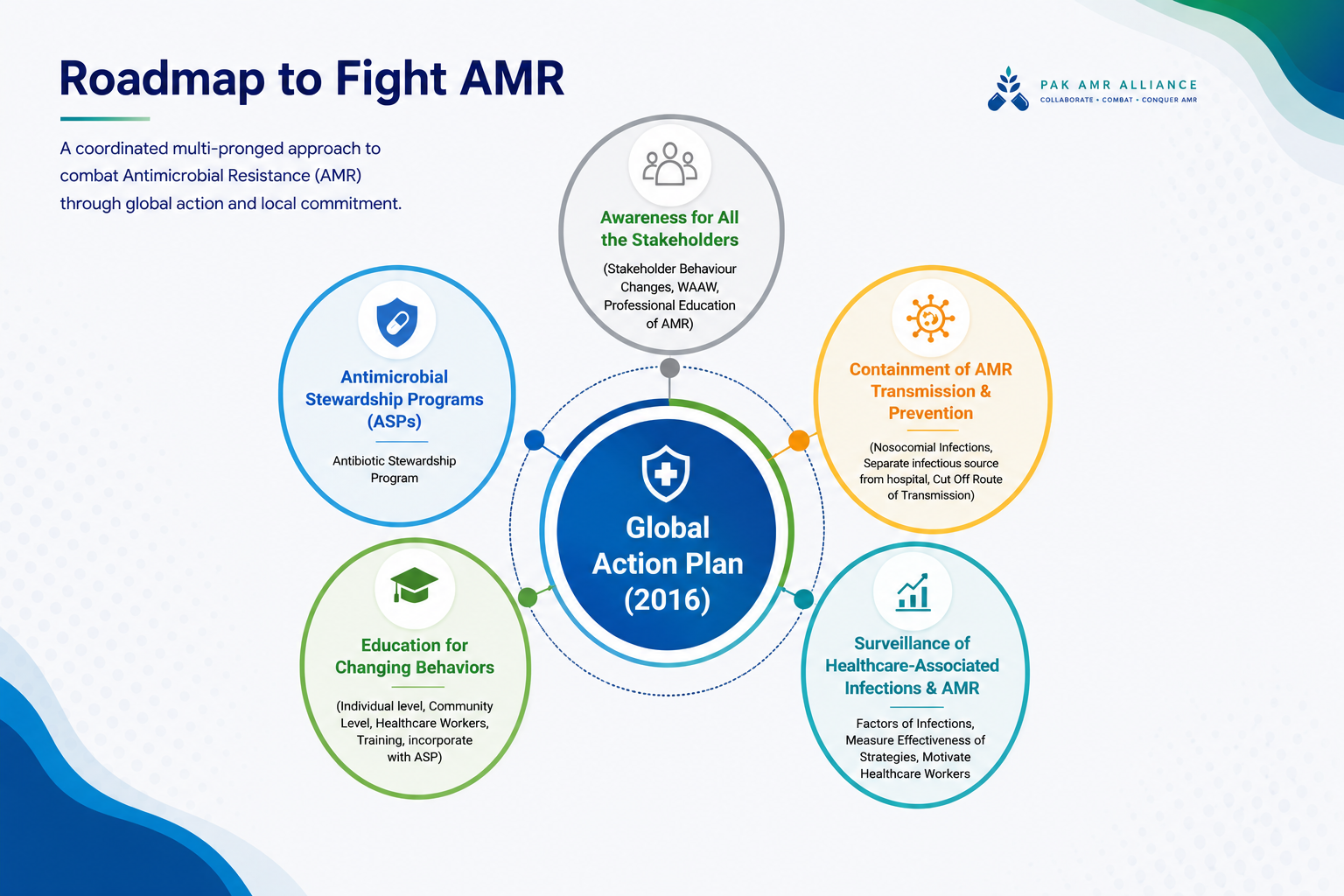
Antimicrobial Resistance (AMR) poses a profound threat to human health, undermining the efficacy of antibiotics that have been the cornerstone of modern medicine. As bacteria, viruses, fungi, and parasites evolve to resist the effects of medications, common infections become harder to treat, leading to longer illnesses, higher medical costs, and increased mortality. A 2019 report indicated that nearly 5 million deaths worldwide were associated with drug-resistant bacteria, with almost 1/4 of these deaths (1.27 million) being directly attributed to AMR. Importantly, AMR-related deaths are not distributed equally around the globe: nearly 90% occurred in under-resourced countries.
Antimicrobials especially Antibiotics play an important role in the treatment of plants and animal’s diseases that is directly or indirect linked with food security. The antimicrobials usage varies worldwide; the rates are higher in middle-income countries like Pakistan, India, and Bangladesh. Very few countries have a record of antimicrobial usage in agriculture. As the demand for animal-sourced food and food products has been increasing in previous decade, the antimicrobials demand is also expected to rise, unless practices are modified to minimize their need.
Healthy Environment and AMR–The environment plays a key role in the spread and control of AMR. Resistant bacteria and antimicrobial residues can enter water, soil, and ecosystems through healthcare waste, agriculture, livestock, and industrial activities. Environmental contamination creates pathways for AMR bacteria to survive, multiply, and transfer between humans, animals, and the environment. Through the One Health AMR approach, environmental protection is essential for reducing AMR risks by promoting:Safe water and waste management, Responsible antimicrobial use, Sustainable agriculture practices, Environmental surveillance of resistant bacteria, and Collaboration between human, animal, and environmental health sectors.