
Antimicrobial Resistance (AMR) in Veterinary & Livestock Health
The veterinary and livestock sector is a cornerstone of Pakistan’s food security, rural livelihoods, and national economy. However, the increasing development and spread of Antimicrobial Resistance (AMR) within animal production systems poses a serious threat to animal, plants and human health. Resistant pathogens emerging in livestock can move across ecosystems and into communities, undermining the effectiveness of essential medicines and jeopardizing public health. AMR in veterinary systems is now recognized as a critical national priority requiring coordinated action, evidence-based policies, and strengthened stewardship.
The Growing Challenge of AMR in Animal Production
Antimicrobials are routinely used in livestock and poultry for therapeutic, prophylactic, and, in some cases, growth promotion purposes. Inappropriate or excessive use can accelerate the development of resistance, diminishing the ability to treat common animal diseases.
Key issues include:
- Emergence of resistant bacteria in poultry, dairy cattle, small ruminants, and aquaculture systems
- Increasing treatment failures due to reduced effectiveness of veterinary antimicrobials
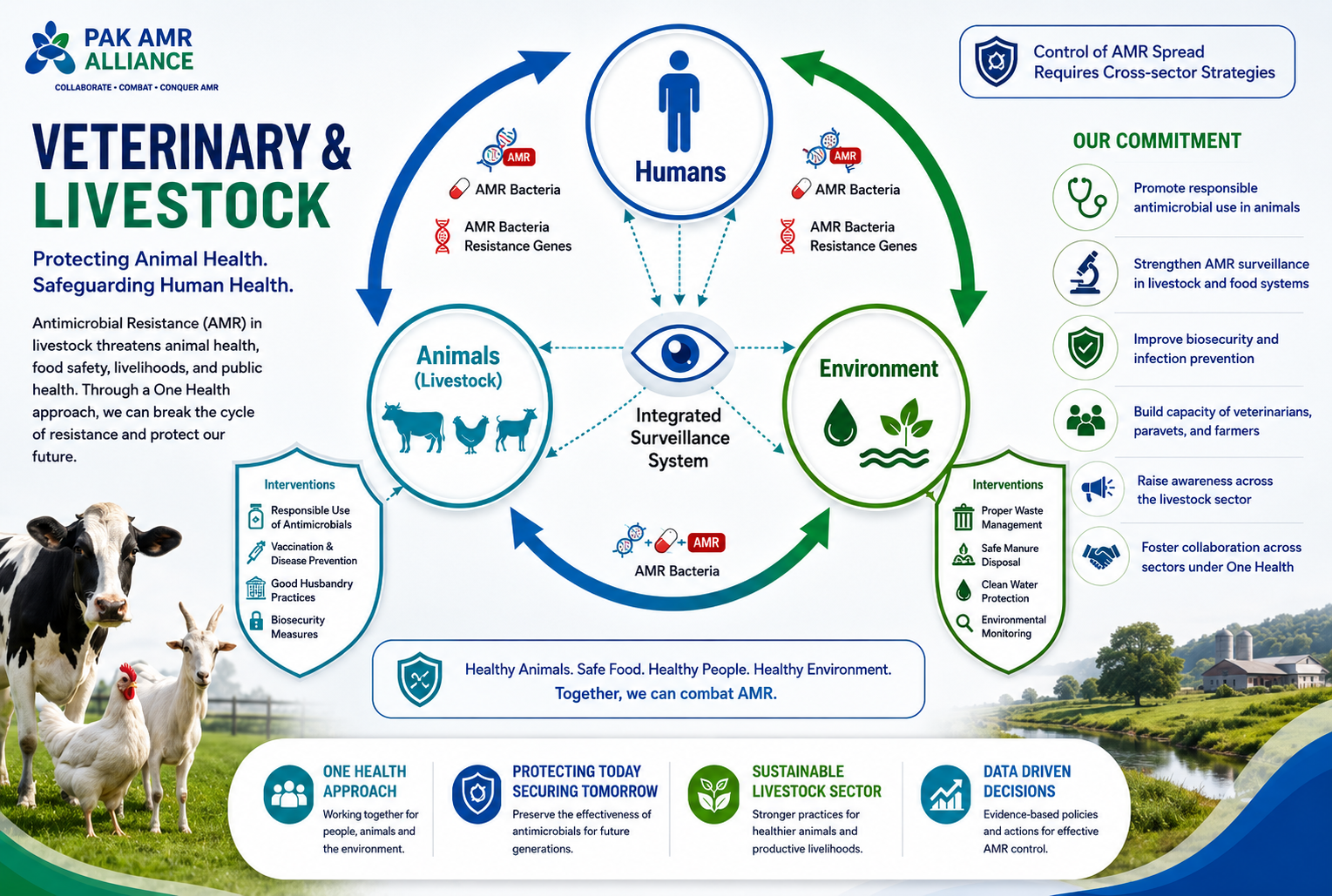
- Transmission of resistant pathogens through food products, animal contact, and farm environments
- Release of resistant microorganisms and antimicrobial residues into soil and water through animal waste
- Economic losses caused by reduced productivity, increased mortality, and higher treatment costs
- Spread of resistant pathogens through the food chain, farm environments, and direct human contact
- Contamination of soil and water through animal waste, expanding environmental reservoirs of AMR
- Left unaddressed, AMR can weaken Pakistan’s livestock sector and directly impact national food safety and public health.
Our Commitment to Strengthening Veterinary AMR Governance
The PAK AMR Alliance is committed to advancing AMR control in animal health through:
- Antimicrobial Stewardship Programs: Promoting evidence-based prescribing, proper dosing, and alternatives to non-therapeutic antibiotic use.
- Enhanced Surveillance: Supporting laboratory capacity and coordinated monitoring of resistant pathogens in animals, farms, feed, and food products.
- Capacity Building: Training veterinarians, para-vets, farmers, and industry actors on responsible antimicrobial use and disease prevention.
- Biosecurity & Preventive Measures: Encouraging vaccination, improved animal husbandry, and farm hygiene to reduce disease burden and reliance on antimicrobials.
- Policy Support & Advocacy: Working with government bodies to strengthen regulations, veterinary drug controls, and national AMR action plans.
- Stakeholder Awareness & Engagement: Empowering producers, veterinary professionals, and communities with knowledge to mitigate AMR risks.