
Environment Sciene & One Health AMR
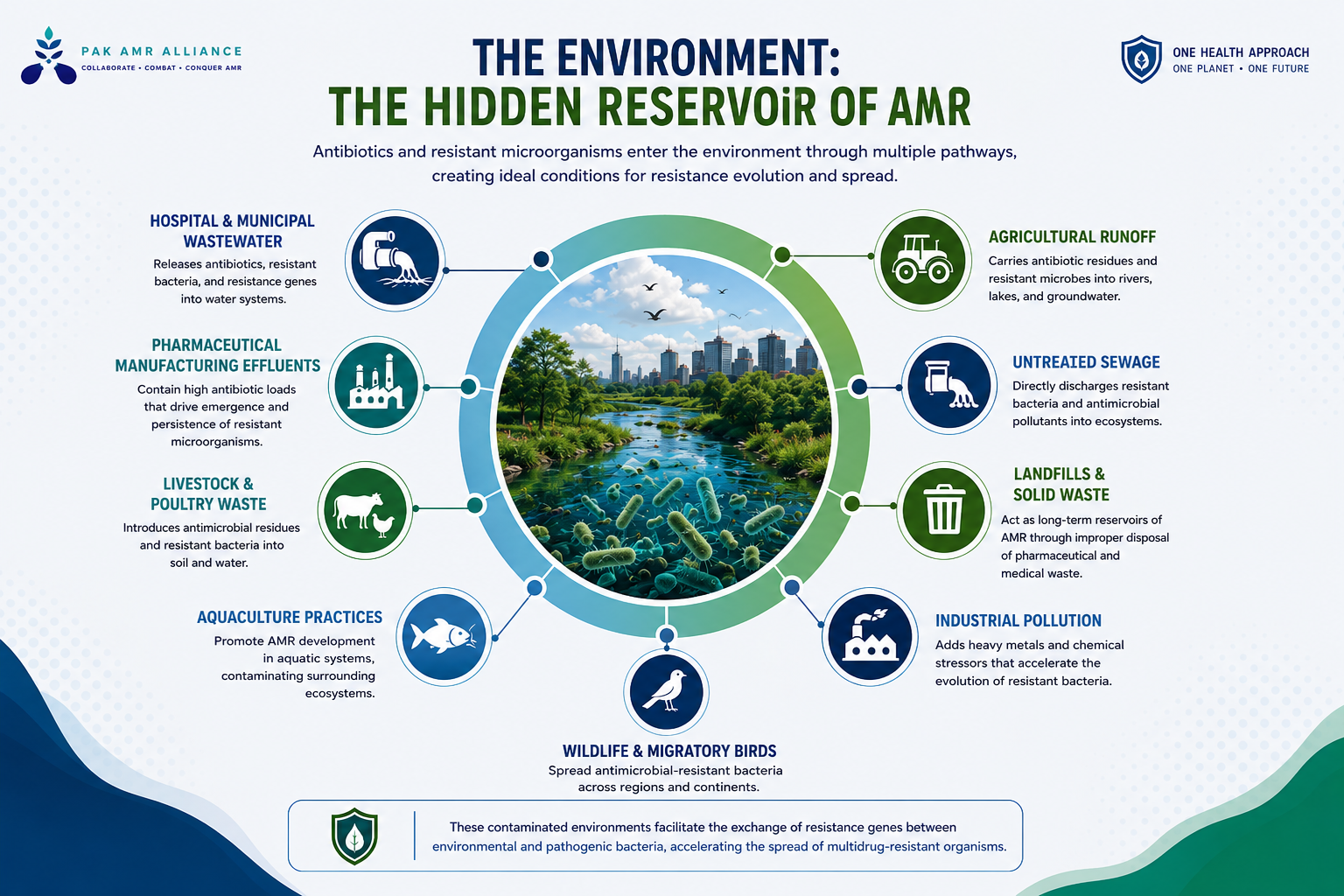
Antimicrobial resistance (AMR) is no longer confined to clinical settings, it is increasingly recognized as an environmental and ecological crisis that demands a unified One Health response. A significant but often overlooked driver of this crisis is the environment, where antibiotic residues, resistant bacteria, and resistance genes persist and circulate through water bodies, soil, agricultural systems, and food chains. Environmental contamination from untreated hospital effluents, pharmaceutical waste, agricultural runoff, and intensive livestock farming creates continuous selective pressure that accelerates the emergence and spread of multidrug-resistant organisms. In many low and middle income countries, including Pakistan, a large proportion of wastewater is discharged without adequate treatment, enabling resistant pathogens to enter rivers, irrigation systems, and drinking water sources. This environmental dissemination directly links human, animal, and ecosystem health in a complex and interdependent cycle. Pakistan faces additional challenges due to limited wastewater treatment infrastructure, high antibiotic usage in both human and veterinary sectors, rapid urbanization, and insufficient environmental monitoring systems for AMR. These factors collectively intensify the environmental burden of resistance and increase the risk of widespread dissemination across communities and ecosystems.
Within the One Health framework, it is now well established that AMR cannot be effectively controlled without addressing its environmental dimension. The same resistance genes detected in clinical pathogens are frequently found in wastewater and agricultural environments, demonstrating continuous exchange across sectors. This interconnected transmission highlights the urgent need for integrated surveillance, responsible antimicrobial use, and environmental management strategies. The Pak AMR Alliance addresses this critical gap by promoting a multidisciplinary One Health approach that integrates environmental science, microbiology, veterinary medicine, public health, and policy development. Through collaborative research, environmental AMR surveillance, capacity building, and evidence-based advocacy, the Alliance aims to strengthen national efforts in understanding and controlling environmental drivers of antimicrobial resistance.
The Hidden Reservoir of AMR
One Health Antimicrobial Resistance (AMR) approach integrates human health, animal health, plant health, and environmental protection into a single collaborative strategy. This integrated approach is now recognized globally as the most effective strategy to prevent and control antimicrobial resistance.
- Responsible antibiotic use, infection prevention, and antimicrobial stewardship.
- Sustainable animal health practices to reduce antimicrobial resistance.
- Smart farming that protects crops while minimizing antimicrobial dependence.
- Safe food systems that interrupt the transmission of resistant bacteria.
- Monitoring pollution, antibiotic residues, and environmental reservoirs of AMR.
- Clean water and effective wastewater treatment to stop the spread of resistance.
- Reducing environmental pressures that drive the evolution of resistant microorganisms.
- Science-driven policies, surveillance, and multisectoral collaboration for sustainable AMR control